

Pain Perdu Recipe
SHARE THIS RECIPE!

Learn how to make my Pain Perdu Recipe, the “Original” French Toast. An easy breakfast recipe for a delicious treat that will put a stale baguette bread to good use! And the best part is, you probably already have all the ingredients you need on hand!
Looking for more breakfast recipes? Try my Foolproof Crepe Recipe, Blueberry Crumb Cake, or my easy Egg Bake Soufflé.
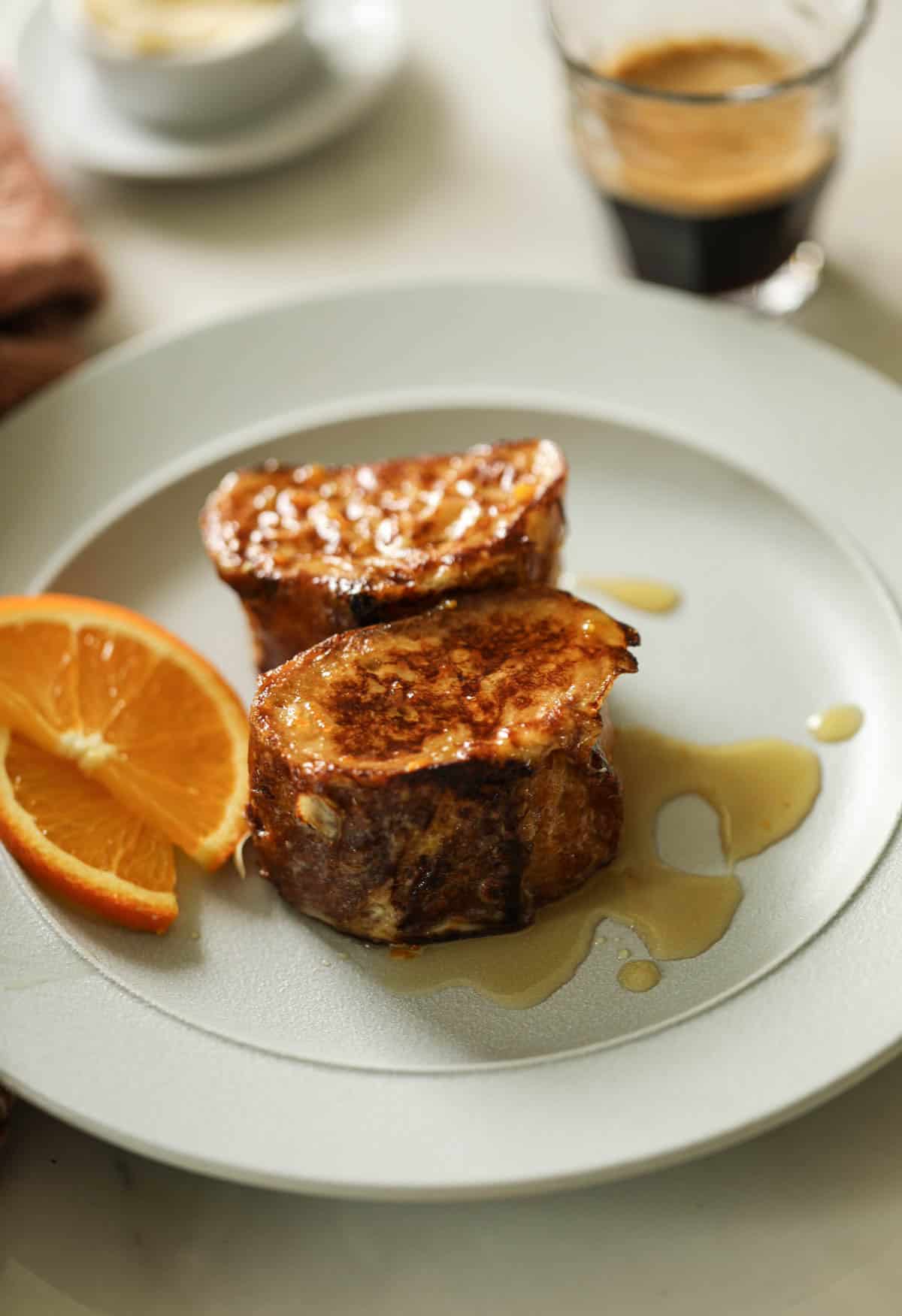
Dealing with Leftover Bread in France
- When you spend time in French homes, you start to realize there’s always a lot of French bread lying around. Typically, a few pieces are left over from lunch, dinner, and even breakfast.
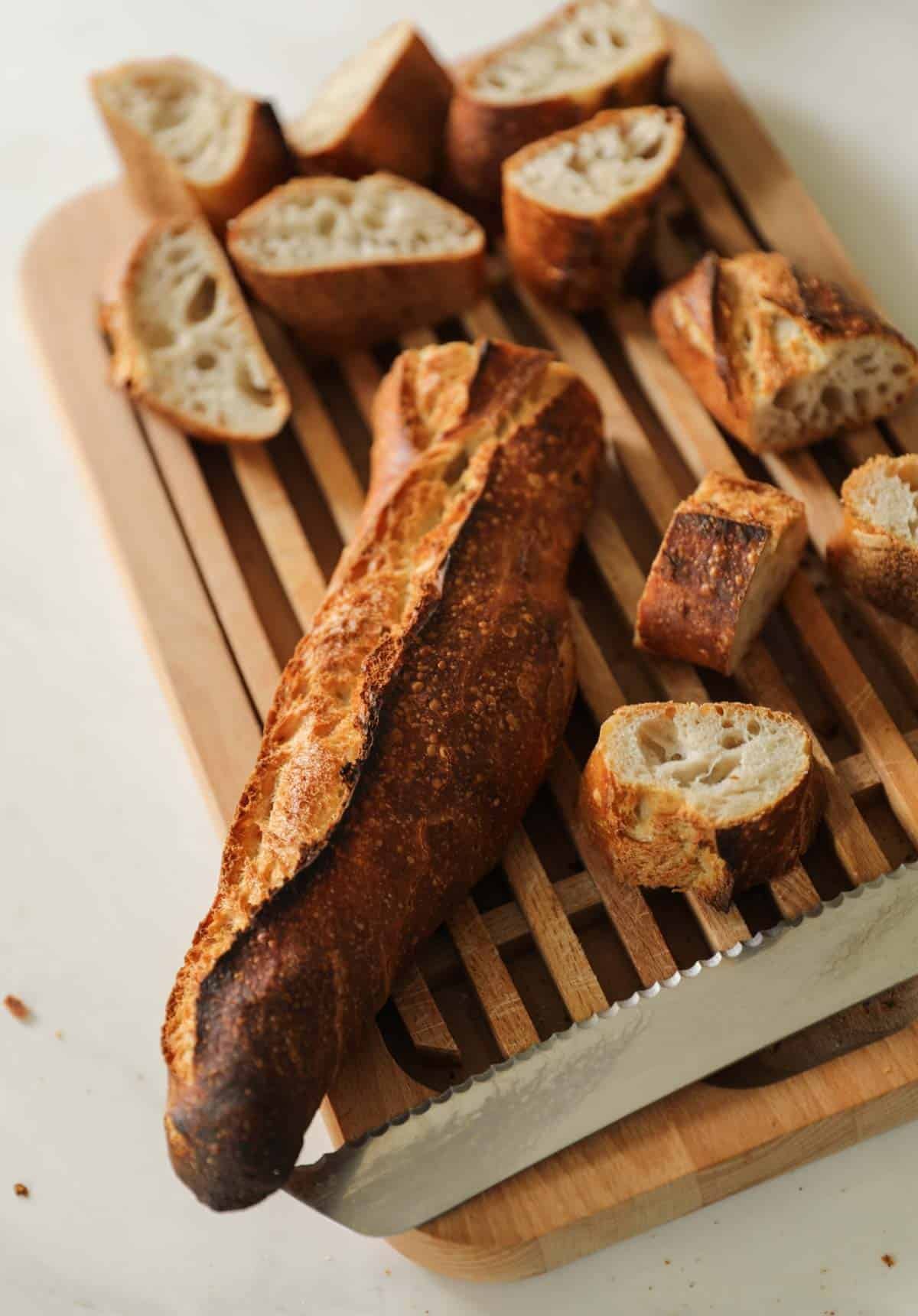
- Because the French love their fresh bread, it’s typically bought daily and goes stale pretty quickly. When it does, it’s hard as a rock!
- So, what to do with it, you might ask? Pain perdu is your move. Because really, how many containers of bread crumbs do you really need sitting in your freezer?
Would you like to save this?
Is Pain Perdu the Same as French toast?
- Pain Perdu, pronounced PAYN-pair-do, is really the origin of our American “French Toast”.
- In French, pain perdu means “lost bread” because it’s made with a French baguette that has gone stale, usually by the next day.
- This is probably the biggest difference between pain perdu and French toast: Pain perdu is typically made with a French baguette, whereas in the U.S., we typically use thick sandwich bread.
- In France, pain perdu can also be served as a dessert, using brioche bread, and topped with ice cream and caramel sauce. Or some sauteed apples with a splash of calvados is also nice.
- In all cases, the egg batter is the same: eggs, milk, and vanilla extract. But I also like to add a little orange zest too.
- Two things you won’t see used in France on French toast are cinnamon or maple syrup; those are definitely American additions!
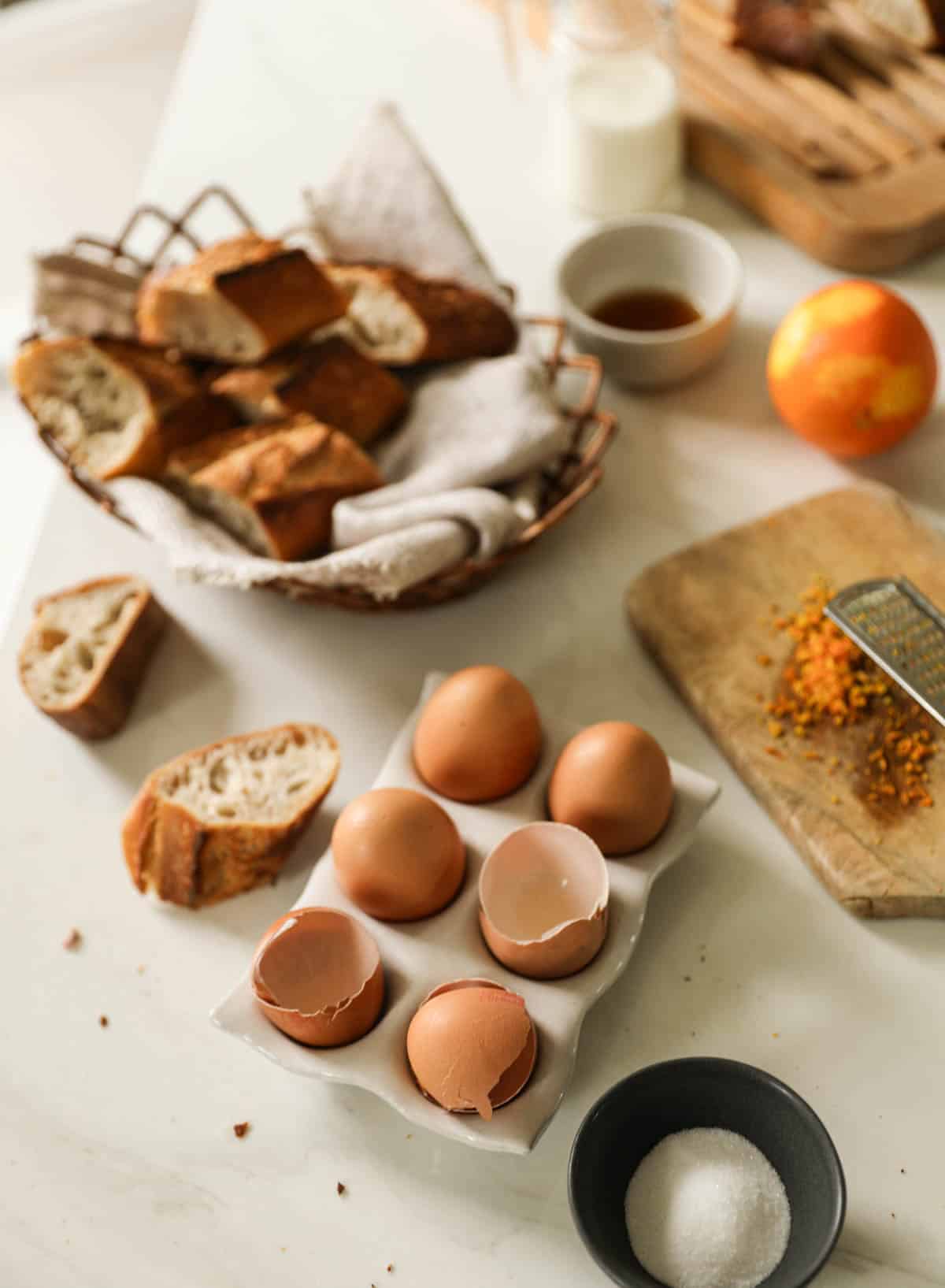
Ingredients:
- French Baguette: It’s best to use stale bread for pain perdu; otherwise, fresh bread will practically disintegrate in the egg bath. A high-quality French baguette will go stale in 24 hours. So it’s best to slice it before then and store the slices of bread in a Ziploc bag at room temperature. Otherwise, the baguette will be really hard to slice the next day.
- Eggs: This recipe calls for 3 large eggs, which help give the egg mixture a nice custard-like texture, softening the bread and making it nice and custardy.
- Milk: I use whole milk for a richer egg mixture, but if skim or low-fat milk is all you have in the fridge, that will work too.
- Sugar: I add a tablespoon just to sweeten up the egg mixture a bit.
- Vanilla Extract: Use pure vanilla extract for the best vanilla flavor.
- Orange Zest: I love the combination of vanilla and orange; it’s such a winner, especially in the wintertime, when the hominess of the vanilla is accented by a little fresh orange zest.
- Salt: Just a pinch to heighten the flavors of the vanilla and the orange.
- Butter: I use butter to cook the pain perdu in the pan, and at the end, to slather it over the top once it’s done.
- Maple Syrup: I can do without the cinnamon, but it’s hard to give up the maple syrup! So I do like a nice drizzle over the top of the pain perdu; the maple flavor also pairs nicely with the orange zest, too.
Step#1: Prepare the Egg Mixture
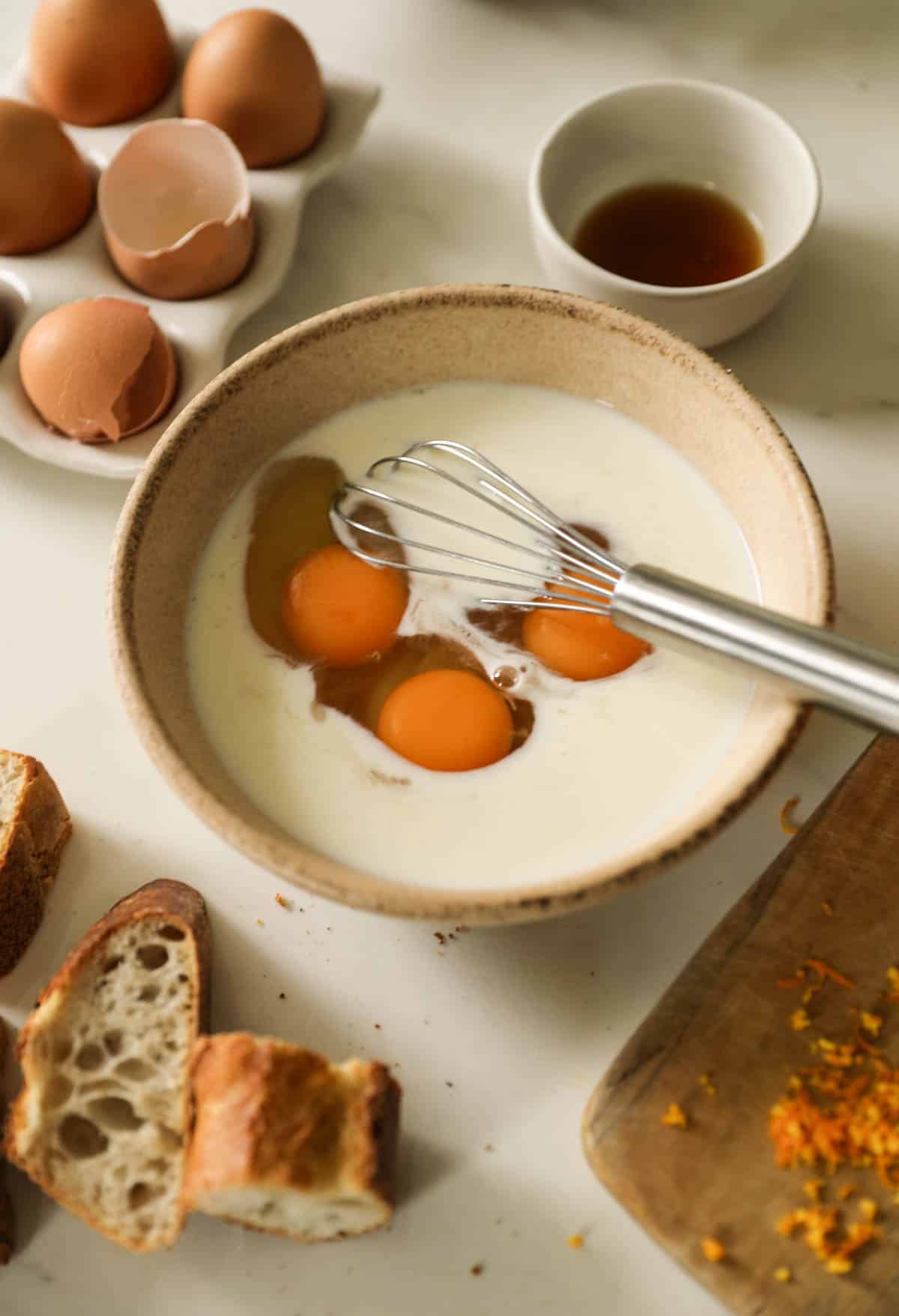
- In a shallow bowl, add the eggs, milk, sugar, and salt, and whisk them together. Then, add the vanilla and orange zest, and whisk to combine.
- Use room-temperature eggs; they’ll be easier to whisk that way, and a shallow bowl will allow soaking at least 3-4 slices of bread at a time.
- You can also prepare the egg mixture in advance and keep it in the refrigerator until ready to use.
Variations:
- Switch up the flavor profiles but adding different flavorings to the egg mixture.
- Almond extract is a delicious addition. Skip the orange zest and instead top the finished pain perdu with toasted sliced almonds.
- Instead of extracts, you can also use various alcohols like Rum, Calvados, Amaretto, or Frangelico.
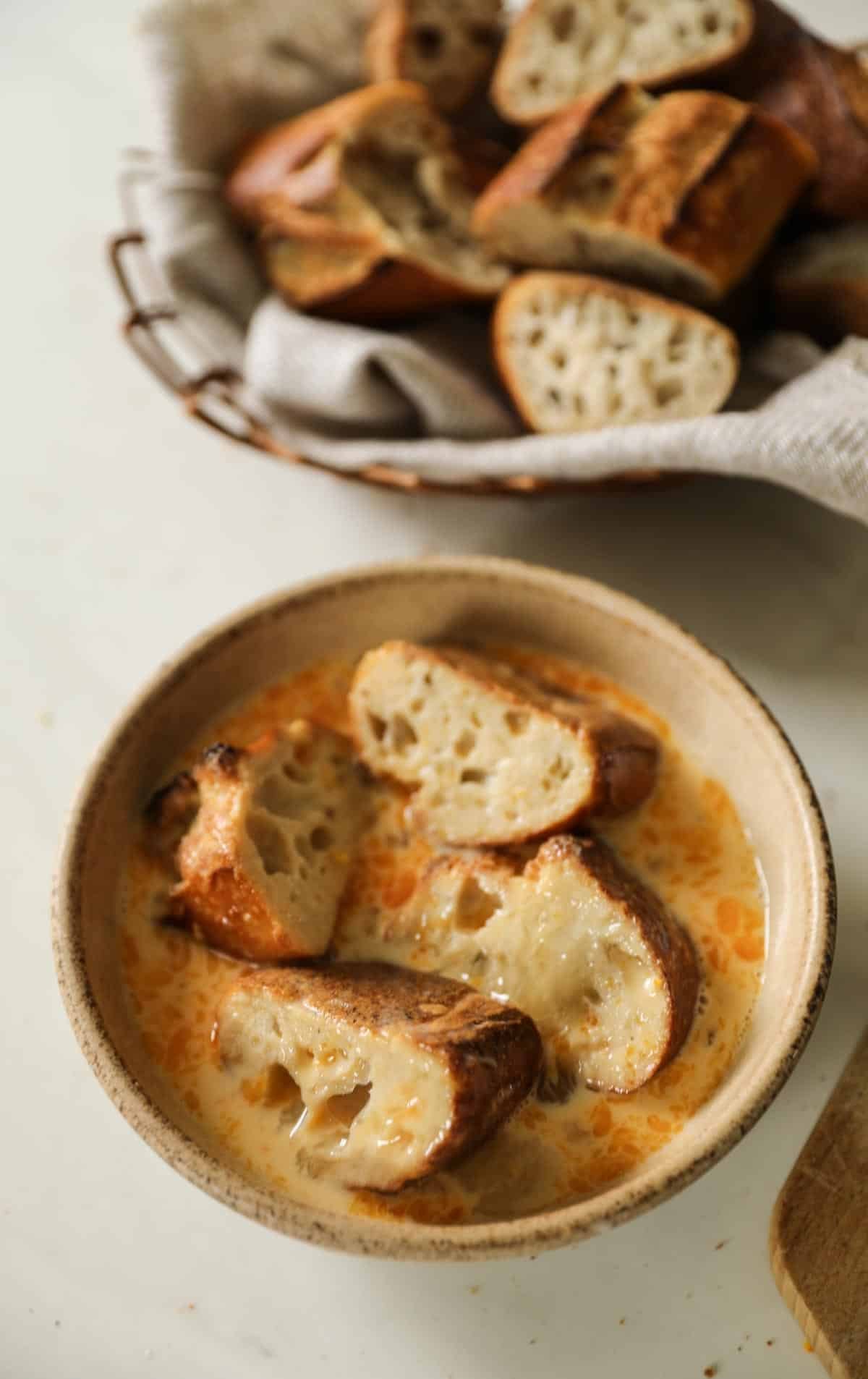
Step#2: Allow Time To Soak
- When soaking the bread, be sure to give it time to soak up the liquid.
- Stale baguettes can be dense, so you want to make sure the liquid has a chance to soak through the bread and crust, making it softer once cooked.
- Otherwise, your pain perdu can turn out a bit dry. So don’t rush this process.
- Flip the bread slices as well to ensure equal absorption of the egg mixture on both sides.
Step#3: Cooking the Pain Perdu
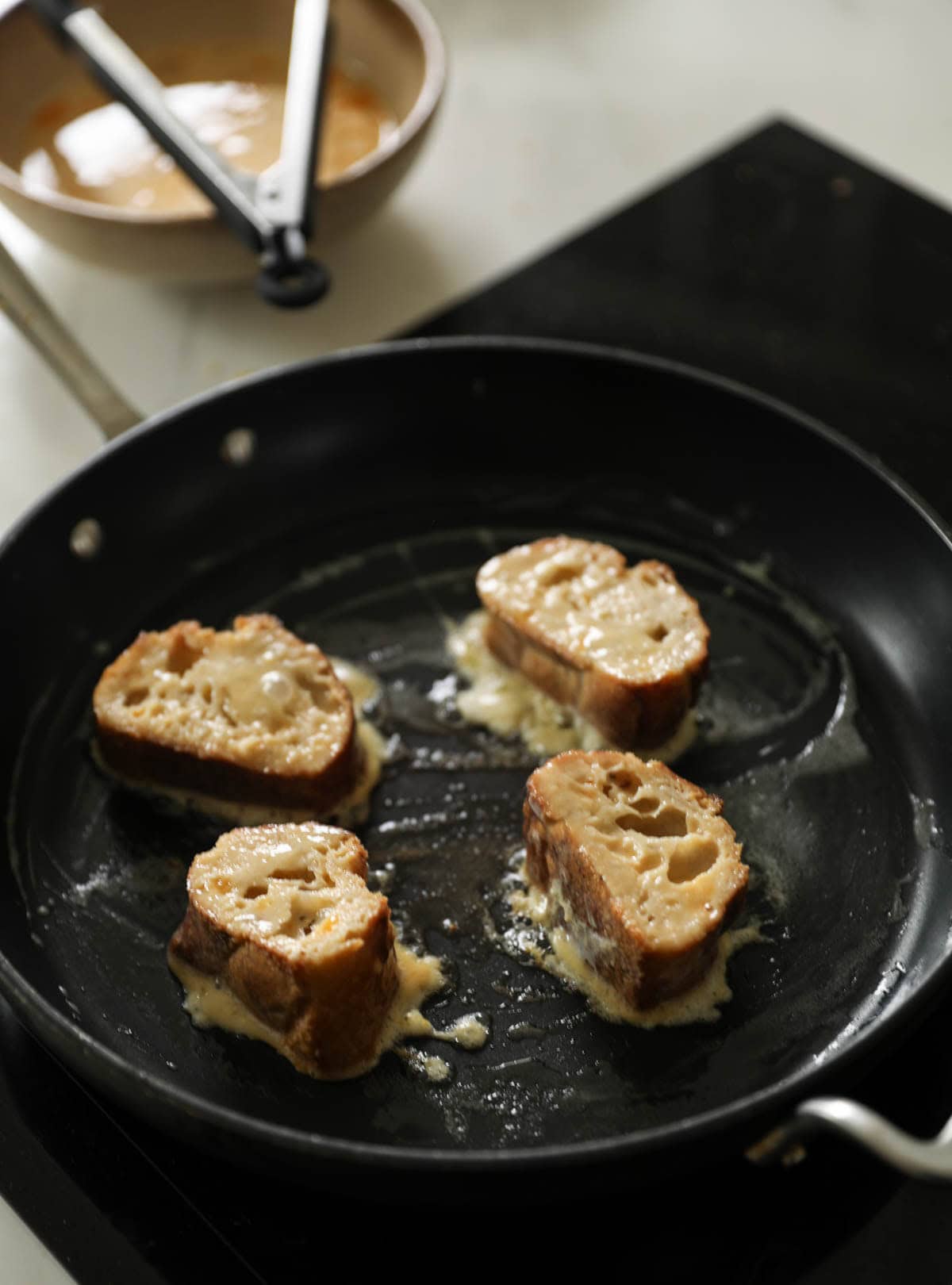
- Place a large non-stick skillet on medium heat and melt the butter.
- Then remove the bread from the egg mixture, one slice at a time, and allow the excess liquid to drip off.
- Allow the bread to cook on both sides until golden brown, and the egg is cooked through.
- Be sure you give it enough time to cook off the raw egg. About 2-3 minutes per side.
- Once you’ve achieved a nice golden brown color, you can turn down the heat to avoid over-browning.
- Transfer to a 300°F (150 °C) oven to keep warm while you cook off the rest of the bread.
Don’t Forget The Sides
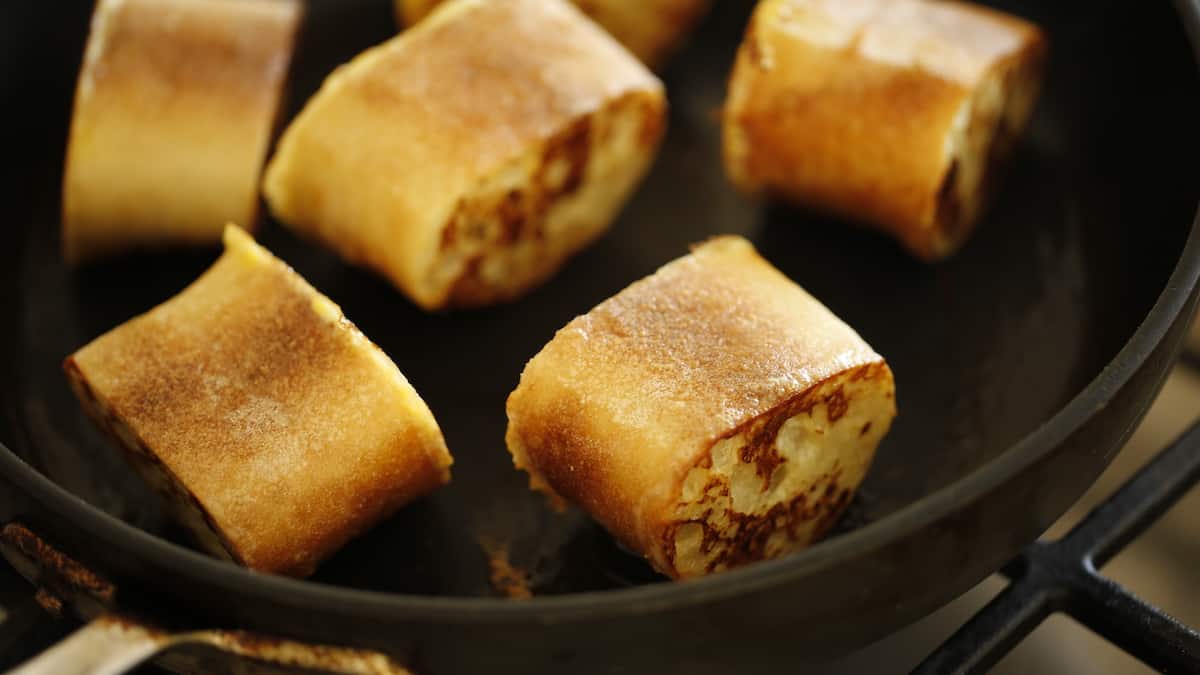
- It’s also important to cook on all sides so that if any raw egg spills out the tops and bottoms, it will be cooked off too. This will cook off any bacteria from the raw egg.
- Extra time in the skillet will also create some nice color on the top of the bread and give it a nice crunch once it’s done.
Serving Tips
- Pile the pain perdu on a platter and serve family-style.
- You can serve it with butter and jam, or more orange zest and a drizzle of warm maple syrup.
- Or a dusting of powdered sugar on top is also nice.

Related Recipes

Pain Perdu Recipe
Yield:
4
Prep Time:
15 minutes
Cook Time:
15 minutes
Total Time:
30 minutes
Pain Perdu Recipe: The “Original” French Toast. An easy recipe for a delicious breakfast treat that will put any stale baguette to good use!
4.4 Stars (21 Reviews)
Ingredients
- 1 day old baguette cut into 8 slices (2in thick)
- 3 eggs
- 1/2 cup (120 ml) milk
- 1 tsp (5 ml) sugar
- ¼ tsp (1.25 ml) salt
- 2 tsp (10 ml) vanilla
- 1 tbsp (15 ml) orange zest
- 2 tbsp (30 ml) syrup
- 2 tbsp (30 ml) butter
- 1 tbsp (15 ml) orange zest
- A sprinkle of orange zest for garnish
Instructions
- Slice the baguette into 2" thick slices, set aside.
- In a shallow bowl, add the eggs, milk, sugar, and salt and whisk them together. Then, add the vanilla and orange zest, and whisk to combine.
- Then place bread in the bowl to soak for at least a total of 6 mins (3 mins on each side)
- While the bread is soaking, you can heat the syrup. In a saucepan, heat 2 tbsp (30 ml) of syrup, 2 tbsp (30 ml) butter, and 1 tbsp (15 ml) orange zest until warm. Keep on a very low flame just to keep warm.
- Then heat 1 tbsp (15 ml) of butter in a large non-stick skillet. Place soaked bread in a pan; be careful not to crowd them so they can brown. Once browned on 1 side, flip them on the other side and cook for another 1-2 minutes until golden brown. Then turn them over to brown a bit, making sure the raw egg is cooked on all sides.
- Then remove from the pan and place on a serving platter. Drizzle the orange syrup over the bread and top with some freshly grated orange zest to garnish. Enjoy!
Nutrition Information:
Yield: 4 Serving Size: 1Amount Per Serving: Calories: 275Total Fat: 6gSaturated Fat: 2gTrans Fat: 0gUnsaturated Fat: 3gCholesterol: 140mgSodium: 541mgCarbohydrates: 43gFiber: 2gSugar: 4gProtein: 13g
One Comment