

Coq au Vin Blanc
SHARE THIS RECIPE!

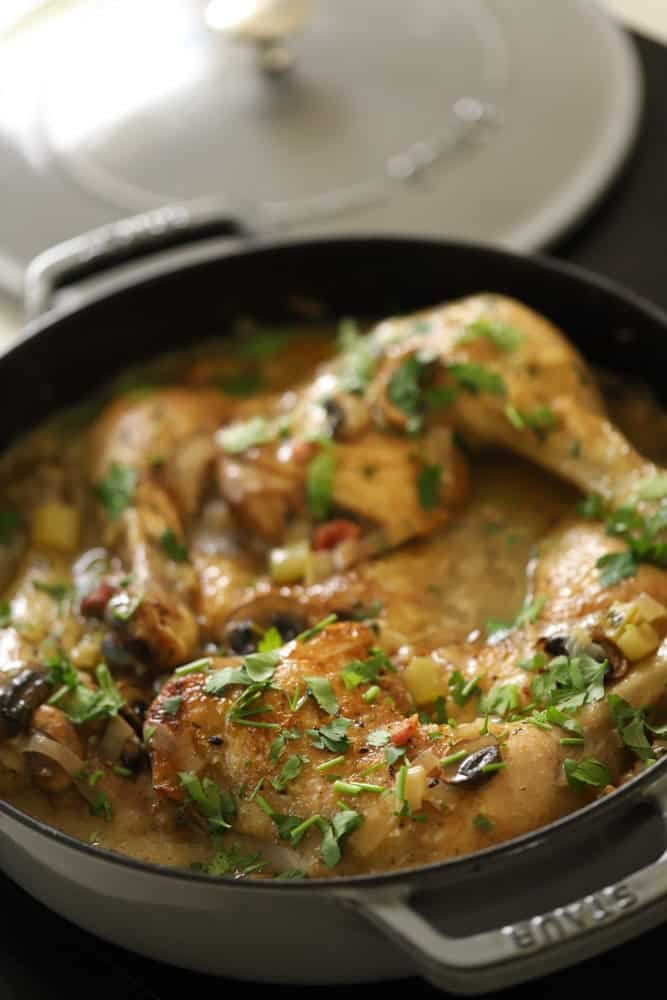
This Coq au Vin Blanc recipe is a lighter take on the classic French dish, Coq au Vin, which is traditionally made with red wine.
This version is made with white wine, spring vegetables, and fresh parsley. It’s perfect for easy entertaining or a cozy weeknight meal.
Ingredients
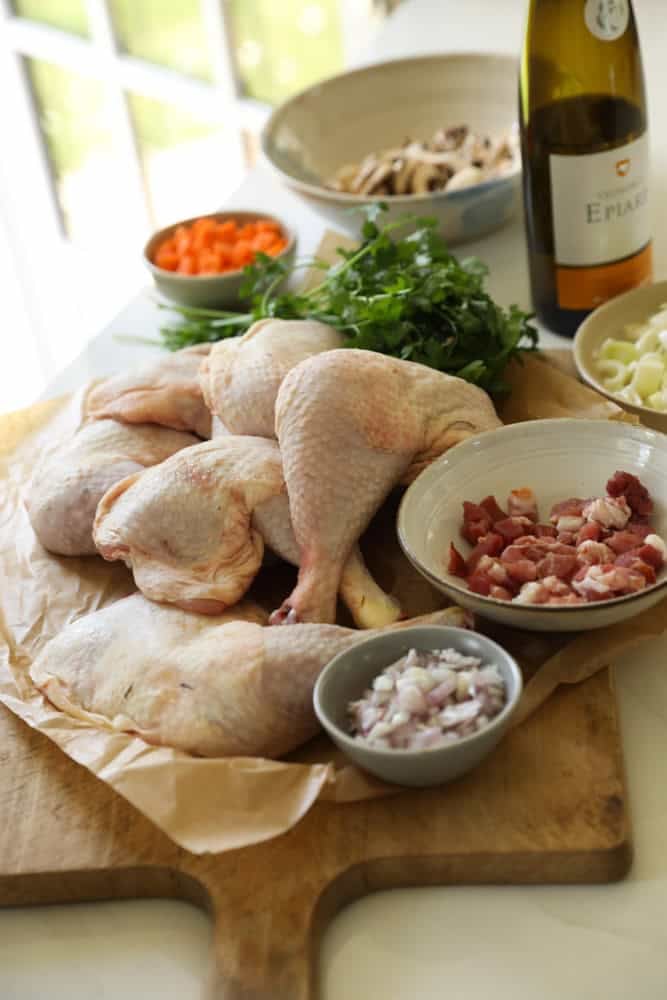
- Chicken Legs Traditionally, Coq au Vin is made from a rooster, the literal translation is “Rooster in Wine”. But today, it’s easily made with chicken. I prefer skin-on, bone-in chicken for the best flavor and texture. You can either use the full chicken leg, or just the thighs and drumsticks separately. I like to use a braiser to serve oven-to-table, and I can fit six whole legs in this Staub Braiser. Yes, it’s pricey, but a great investment! I also use it in the winter to make my Hunter’s Chicken, another classic French dish.
- Salt, Pepper, Herbs de Provence I use these seasonings to season the chicken legs before searing and roasting.
- Bacon/Lardons In France, we use lardons, a type of thick-cut bacon. But in the States, you can use sliced bacon and cut it into large chunks.
- Leeks You’ll use just the white parts, sliced into half moons. I like the use of the leeks for a lighter coq au vin, over onion.
- Shallots. These will also add a nice springtime flavor. You’ll cut them into a small dice.
- Carrots cut into a large dice.
- Celery cut into a slightly larger dice then the carrots. I think it looks pretty once the dish is done to have all the vegetables cut into slightly different variations. Makes the sauce more visually interesting when spooned on top.
- Butter: For the mushrooms, you have two choices. My preferred method is to sauté them in butter in a separate pan until brown and caramelized. The flavor is better this way. Alternatively, you can toss them in after the celery and saute them with the rest of the vegetables after they have started to soften a bit.
- Mushrooms, you can use white or brown mushrooms, sliced.
- White Wine For Coq au Vin Blanc, a lighter white wine works best. A dry sauvignon blanc or pinot grigio would be a good choice.
- Chicken broth will be added after the wine is reduced.
- Garlic Use fresh garlic over anything pre-crushed or in a jar. The flavor will be better that way.
- Worcestershire Sauce Just a few dashes added to the sauce will give it more depth of flavor.
- Cornstarch + Water will be combined to thicken the sauce.
- Heavy Cream Just a few tablespoons to make the sauce a bit creamier.
- Lemon Zest No one will taste the “lemon” flavor, it will just taste fresh, and brighten the flavors for spring.
- Fresh Parsley complements the wine and lighter flavors in this dish.
Would you like to save this?
Searing the Chicken Legs
- I prefer a two-step process to cook the chicken.
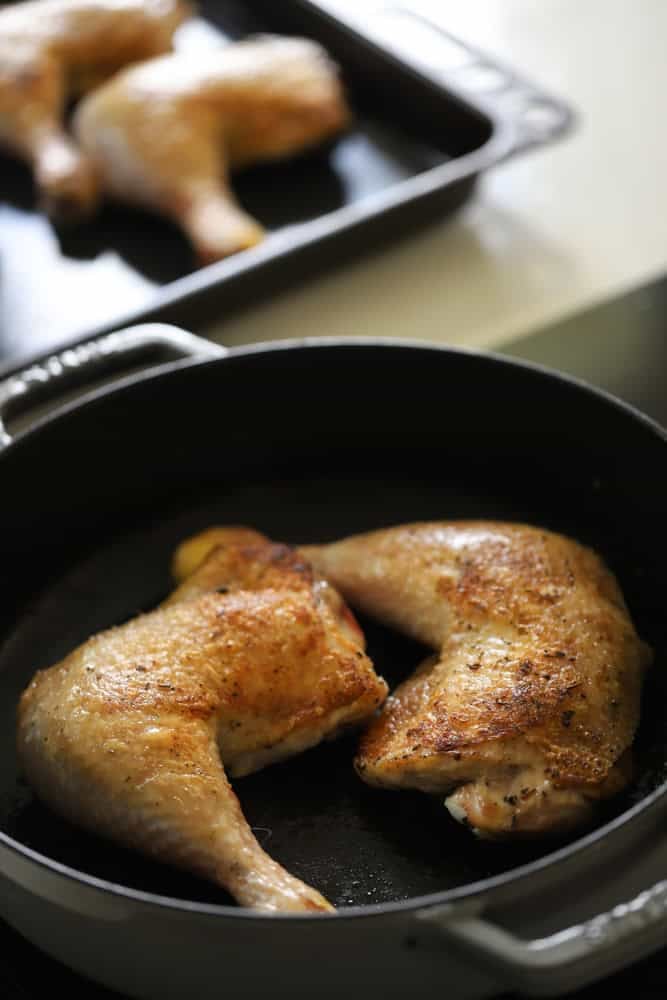
- First, I cook the bacon until it is crispy. Then I sear the chicken in the bacon fat to add more flavor to the chicken. The rendered fat from the chicken serves as the fat for cooking the vegetables in the next step.
- I don’t cook the chicken through at this stage, just enough for a nice sear.
- Then I place the legs on a sheet pan and roast them in the oven. This method allows for two benefits.
- First, it will allow you to “multi-task” by making the sauce while the chicken cooks through in the oven. Secondly, it will allow the chicken skin to become crispy on all sides, which is hard to achieve on the cooktop.
- Once the sauce and the chicken are done, you place the legs in the pan and pour over the sauce, et voila!
Serving and Pairing Suggestions
- This dish serves beautifully “oven-to-table” in a braiser, allowing guests to serve themselves.
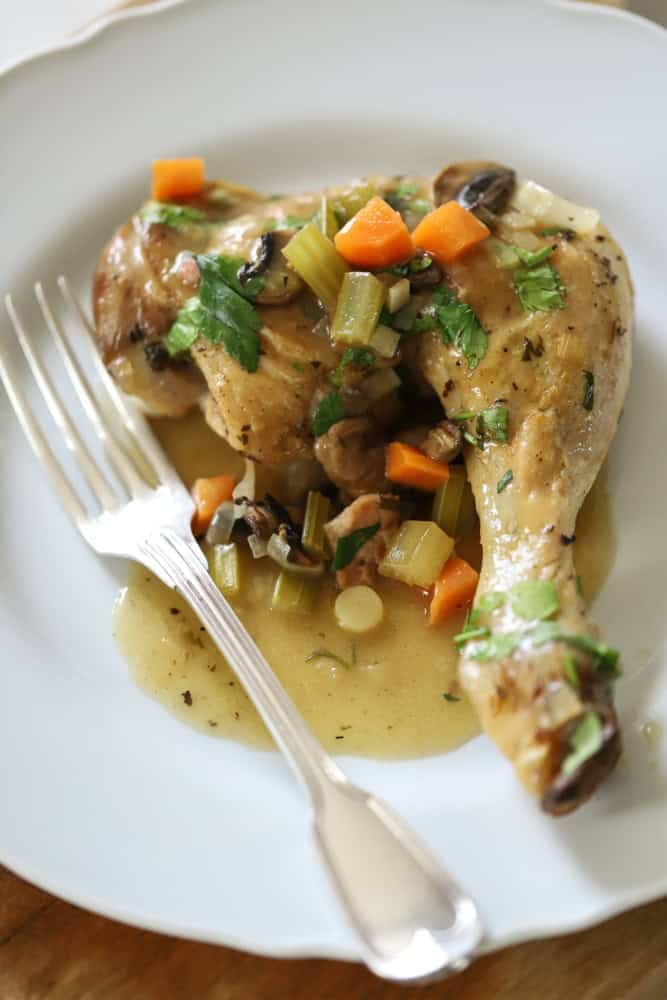
- Or you can plate each dish with one chicken leg, and spoon the sauce and the vegetables over the top.
- As a side dish you could continue the French theme and serve Potatoes Anna on the side or Gratin Dauphinois. Or mashed potatoes or smashed potatoes would be equally good!
- Or if you wanted to keep it easy, buttered egg noodles or Parmesan polenta would also be good too!
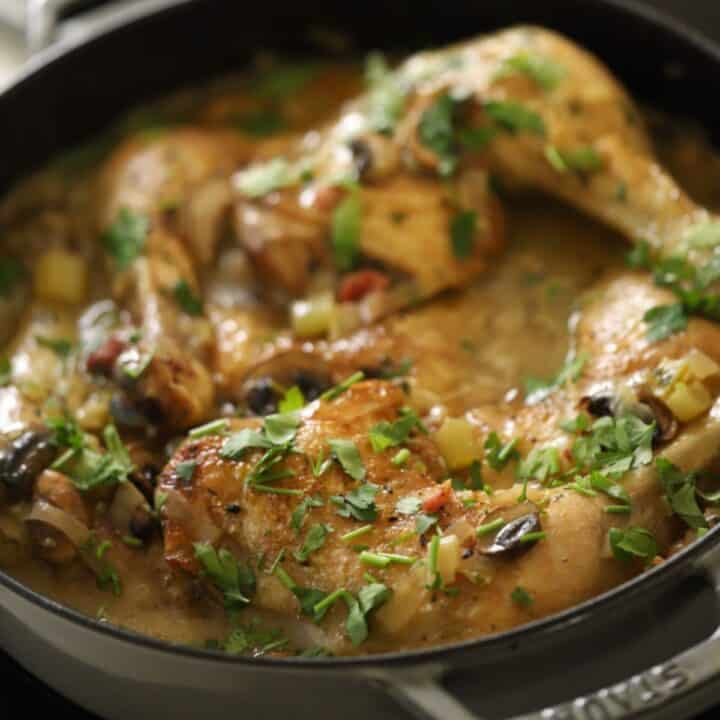
Coq au Vin Blanc
Yield:
6
Prep Time:
1 hour
Cook Time:
25 minutes
Total Time:
1 hour 25 minutes
Coq au Vin Blanc, a lighter take on the classic French dish, made with tender chicken, white wine, and aromatic herbs. This elegant French chicken stew is perfect for entertaining or a cozy weeknight meal.
No Ratings
Ingredients
- A drizzle of olive oil
- 75g (about 6 slices) of apple wood smoked bacon, diced into small strips
- 6 chicken legs, skin on, bone in
- Salt, Pepper and Herbs de Provence, to taste
- 1 cup (130 g) Leeks, 2 medium leeks, white parts into half moons
- ⅓ cup (35g) shallots, diced
- ⅔ cup (95g) carrots, diced, about 1 large carrot
- ⅓ cup (40 g) celery, diced
- 1 tsp (14 g) butter
- 1 ½ cups (80 g) sliced mushrooms
- 1 cup (240ml) white wine (Sauvignon Blanc, Pinot Grigio)
- 3 cups ( 720ml) Chicken Broth
- 2 garlic cloves, minced
- 2 tbsp (13g) cornstarch
- 2 tbsp (30 ml) very cold water
- 2 tbsp (30 ml) heavy cream
- ¼ tsp (large pinch) lemon zest
- 2 tbsp (30 ml) fresh Italian Parsley
Instructions
- Preheat oven to 375F (190C)
- Drizzle olive oil in a large Dutch oven or oven-safe casserole with a lid. Add bacon and sauté until crispy. Transfer with a slotted spoon to a plate lined with paper towels. Leave the fat in the pan.
- Season chicken legs on both sides with salt, pepper, and herbs de Provence to taste.
- In the bacon fat, brown chicken, on both sides, in batches 2 legs at a time. Transfer to a baking sheet. Once all the chicken has been browned, bake at 375F (190C) for 25 minutes or until golden brown and cooked through. Meanwhile prepare the sauce in the same pot.
- In the leftover chicken fat, sauté the leeks and shallots until translucent and fragrant. Then add carrots and celery and cook until tender. Season to taste with salt and pepper.
- Add the wine and simmer until reduced by a third. Then add the chicken broth, garlic, and 3 dashes of Worcestershire Sauce.
- Create a “slurry” by combining 2 tbsp of cornstarch with 2 tbsp of very cold water, mix to combine. Bring the sauce to a boil.
- Once boiling, slowly whisk in the slurry to the pot this will allow the sauce to thicken. Then lower to a simmer. If you find your sauce is too thick, add more chicken broth to thin it out until desired consistency.
- Add the heavy cream, the cooked bacon, lemon zest, and parsley.
- In a large non-stick pan, melt 1 tbsp of butter, add the mushrooms, spread out to a single layer until they are browned and cooked through. Season lightly with salt and pepper.
- Add the mushrooms to the pot and stir. Once the chicken is cooked through place the chicken, skin side up, back into the pot. Spoon the sauce over the chicken so it is coated. Garnish with more freshly chopped parsley and serve immediately in the braiser, oven-to-table.
Notes
If making this the day ahead, cool it completely, refrigerate it, and cover it. Before reheating, add a splash of chicken broth to loosen the sauce and cover and heat at 300°F (150°C) for 20-30 mins until chicken is warmed through
I cannot wait to make this, it looks lovely
Where is the actual recipe?
Apologies! For some reason it wasn’t appearing! But I fixed it so you should see it at the very bottom of the post, or you can also click JUMP TO RECIPE at the top of the post. Thanks for bringing this to my attention!
Hi Beth,
When I hit jump to recipe, the actual recipe with exact ingredients and directions do not come up?
Thanks,
Katie
Me TOO!